

DIGITAL transformation steering committee
Mission
Digital Transformation Steering Committee Charter
• Develop practices for digital supply chain roadmap development
• Establish leading practices for identifying and prioritizing processes for digitization and digitalization
• Accelerate and improve the efficacy of drug development, manufacturing, distribution, and returns/reverse logistics
Digital Transformation Steering Committee Pathways
- Collaborate and learn from each other’s successes and “interesting stories” around digitalization
- Discuss where and how BSMA members can and would like to benefit from specific digital transformation strategic approaches and educational topics
- Identify areas of interest and need in the industry as it pertains to digitalization, not just supply chain digitalization, and digital business transformation
- Determine the best delivery mechanisms and cadence to address the knowledge gaps/areas of interest we identify
Join Steering Committees
- Members are requested to review and respond to Siamak Zadeh’s proposal for a concerted, collective action for adoption of AI. The proposal will be distributed to members separately.
- Russell DeLapp will send the link of the webinar he is organizing about tariffs to the recipients of this memo.
- Randy Bradley recommended xxxx, an economist for future reference regarding tariff discussions.
- Ranjan Sinha confirmed that the SCM experts of IBM he had recommended earlier will present at the BSMA conference in Brussels in October 2025. Thank you, Ranjan!
- Randy Bradley will organize a webinar on an “AI Implementation Model.” Ranjan Sinha, Rich Kilmer, and Devendra Mishra will assist.
- Devendra Mishra has sent out the PowerPoint presentation made by Barbara Garcia from Pfizer about AI Planning to all participants. Members are requested to share case studies of AI deployment.
- The next meeting of the Steering Committee is scheduled for September 16 at 9 am PST.
The conversation included insights from various participants regarding the impact of tariffs on gross margins and supplier transparency. Paul Anderson raised concerns about inconsistent communication from suppliers regarding price increases, while Rich noted a broader trend of price hikes among IoT technology suppliers. Leon differentiated between price increases and surcharges, emphasizing their implications for customer relations. Russell DeLapp introduced a consortium aimed at addressing tariff issues and invited collaboration through customer panels.
The group also explored the integration of AI in supply chain operations, with mention of Barbara Garcia presenting Pfizer’s strategic approach. Randy outlined her four levels of transformation, emphasizing the shift towards deep process transformation through AI. Rich shared Pfizer’s success in automating forecasting for a considerable number of SKUs, leading to improved accuracy and reduced bias. The discussion included the evolving terminology around AI, particularly the concept of agentic AI, and its implications for the industry.
Siamak proposed the formation of a continuous working group focused on AI in supply chain management, stressing the need for a structured approach to leverage AI technologies. Russell discussed the shift towards digital solutions in response to global trade compliance, while Rich elaborated on the use of large language models for logistics management.
Paul Anderson discussed the challenges posed by tariffs and the varying levels of transparency from suppliers about price increases. Randy Bradley asked if suppliers were being transparent about their pricing strategies, to which Paul responded that some were following standard customs procedures while others were not. Rich added that suppliers of IoT technology were also raising prices indiscriminately, indicating a
Russell DeLapp emphasized the role of tariffs in accelerating digital transformation within the life sciences industry. He mentioned that companies are increasingly motivated to digitize their trade compliance processes, leading to innovations such as foreign trade zones to optimize cash flow. Additionally, he introduced a new AI-assistant designed solution to help customers navigate SAP processes related to tariffs. Russell DeLapp invited members to an event his company is organizing with SAP about tariffs.
Randy Bradley suggested that insights from economists could provide valuable perspectives for tariffs.
Randy Bradley shared details from Barbara Garcia’s presentation at a recent conference on Pfizer’s AI-driven supply chain transformation, which is structured in four levels. The company is currently focused on deep process transformation, utilizing machine learning and generative AI to enhance demand planning and reduce human bias in forecasting. They aim to automate forecasting for 13,000 SKUs by 2025, which represents a substantial portion of their operations.
Siamak Zadeh proposed creating a working group to facilitate ongoing discussions and investigations into AI applications in supply chain management. He highlighted the importance of identifying priority areas for immediate ROI and suggested leveraging academic resources for collaborative efforts.
Rich Kilmer highlighted the potential of large language models (LLMs) in enhancing human-computer interaction within the BioPharma sector. He shared his experience running an LLM locally to manage near real-time shipment inquiries and showcase its ability to provide accurate responses based on specific prompts. The discussion also touched on the importance of prompt engineering to eliminate generalization errors and improve the relevance of the model’s outputs.
Rich Kilmer highlighted the importance of technology in building intuitive data interfaces. Ranjan shared insights from his marketing work, focusing on the evaluation of AI models based on their accuracy and relevance. Stefan expressed concerns about the quality of data available for AI training, noting that poor data quality limits the effectiveness of AI applications.
Ranjan Sinha attended a lecture by an expert from Harvard who advises the federal government on tariffs and other aspects. Economist: Dr. Willy C. Shih, Robert, and Jane Cizik Professor of Management Practice, Harvard Business School. Additional references: https://hbr.org/2025/04/the-tariff-wars-just-upended-your-supply-chain-heres-how-to-adapt
Randy Bradley recommended Georg Schauer, an expert on international trade with tariffs, and Mary Marianne Wanamaker, leader of the Baker Center for Public Policy. She is an economist and has also served as a member of administration at the White House. https://haslam.utk.edu/people/profile/georg-schaur/
https://haslam.utk.edu/people/profile/marianne-wanamaker/
Ranjan Sinha mentioned that IBM has rolled out AI agents for procurement to help with supplier selection and evaluation, contract management, purchase order automation, demand forecasting, compliance management. The link to a webpage for AI Agents in Procurement: https://www.ibm.com/think/topics/ai-agents-in-procurement
Leon Trevett observed that there is a process improvement opportunity in AI by taking humans out of the loot and gathering all this data to be able to enrich the forecast. Having humans in the loot is challenging because there is inherently bias. At Illumina, there is a global organization modelling data and creating a baseline forecast, a regional organization adds regional nuance; and a final organization in the demand planning structure aggregates it together and works with global functions like product management, strategy, and longer term projections.
Leon Trevett suggested that we focus on using AI to drive a cognitive engine, a decision support engine, which makes recommendations. This engine must learn with an ML model selected to achieve 95% confidence to turn it into an RPA.
Rich Kilmer stated that in the mid-90s, we had a thing called digital agents with General Magic and Magic Cap. It was a completely different idea, but they had the Telescript programming language, and they built this language called to build digital agents in that you could delegate to and go perform functions like book trips for you.
Randy Bradley mentioned that Albert Bandura (1925-2021), a psychology and social science professor at Stanford, proposed the concept of Agentic AI in the 70s and 80s on human agency.
Russell DeLapp disclosed that one of their customers has requested them to set up a foreign trade zone in their warehouse, so the goods never actually hit the US. They save the cash flow from paying customs because everything they do is export.
Ranjan Sinha mentioned that he will be presenting marketing research utilizing Agentic AI.
Stefan Braun the data quality is sometimes so poor that you we have not enough training data to do things.
Rich Kilmer remarked that the use of AI Assist technology and especially large language models is a user interface to technology. It is a means of human-computer interaction that is effectively becoming multimodal with text-to-speech, speech-to-text capability. Text-to-voice capability.
Randy Bradley agreed to organize a webinar to demonstrate a methodical process to evaluate new models emerging.
Rich demonstrated online how he utilizes LLM to oversee a shipment from shipper to freight forwarder, carrier, customs and receiving depot, through its end-to -end cycle, obtaining status, sending emails required, finding temperature excursions, necessary prompts translated in different languages, etc. He showed the ability to build interfaces that allow one to get to the data needed very succinctly in a way that’s very humane.
The video recording of this meeting is available at:
https://us06web.zoom.us/rec/share/UOijyFl_h0KOaYS5f4YM1IszzVratU9ISPodJ1G8ZXCHuds877r5skp46NDfYeet.Rn50I9pUVEmigjyi?startTime=1747756716000
Passcode: 8+S#IsH0
Chairperson

Randy Bradley
Co-Chairperson: Digital Transformation Steering Committee

Leon Trevett
Co-Chairperson: Digital Transformation Steering Committee

Rich Kilmer
President & CEO, CargoSense

Heather Erickson
Vice President, Supply Chain, Sangamo

Asha D'Souza
Head Healthcare and Life Sciences, Amazon Web Services
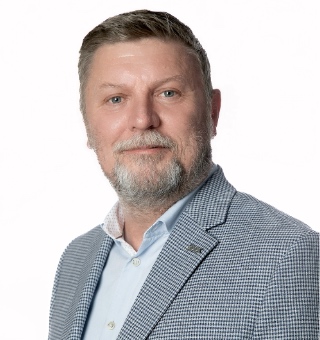
Leon Trevett
Sr Director, Global Supply Chain Planning, illumina

Subbu Panigrahi
Senior Director, Pharmaceutical Development and Manufacturing, Gilead Sciences

Devendra Mishra
Executive Director, BSMA

Chad Sklodosky
Director, Digital Clinical Supply Chain Center of Excellence, Pfizer

Atul Tandon
Executive Adviser, Supply Chain Management, Transformation & Digitization

Ashish Honawar
Director - Data Strategy Business Lead, Pfizer

Bob Lamont
Partner, Clarkson Consulting

Arjun Arora
Customer Facing Data Scientist, DataRobot

Paul Seaback
SVP, Technical Operations, Dermavant Sciences

Paul Brody
Leader, Ernst & Young

Chris Bogart
VP, Supply Chain Management, Bayer Pharmaceuticals

Erik Molitor
Chief Information Officer, Bio-Rad Laboratories

Shweta Maniar
Director, Healthcare & Life Sciences Solutions, Google Cloud

Todd Hein
Sr. Director - Medical Devices - IBU, Oracle

Paula Natoli
Head of Supply Chain & Logistics Industry Solutions, Americas at Google Cloud

Arun Cavale
Principal & Chief Executive Officer, NexInfo Consulting

Ferdi Steinmann
Sr. Global Industry Strategist, Life Sciences

Brian Daleiden
VP Corporate Marketing, Communications, Community, and Co-Founder, TraceLink

Andrew Setikas
Global Head of Life Sciences, Teradata

David Shum
Digital Lead, Digital Transformation & Information Technology

Cyde Klaristenfeld
Self Employed

Steve Clarke
Owner, Steve Clarke Consulting
Marcel Gradidge
Self Employed
Rajeev Mishra
Industry Partner, Healthcare & Life Sciences

Vinod Nagarahalli
Solution Architect, illumina
Video of Meeting
April, 2021
List of attendees
Video of Meeting
March, 2021